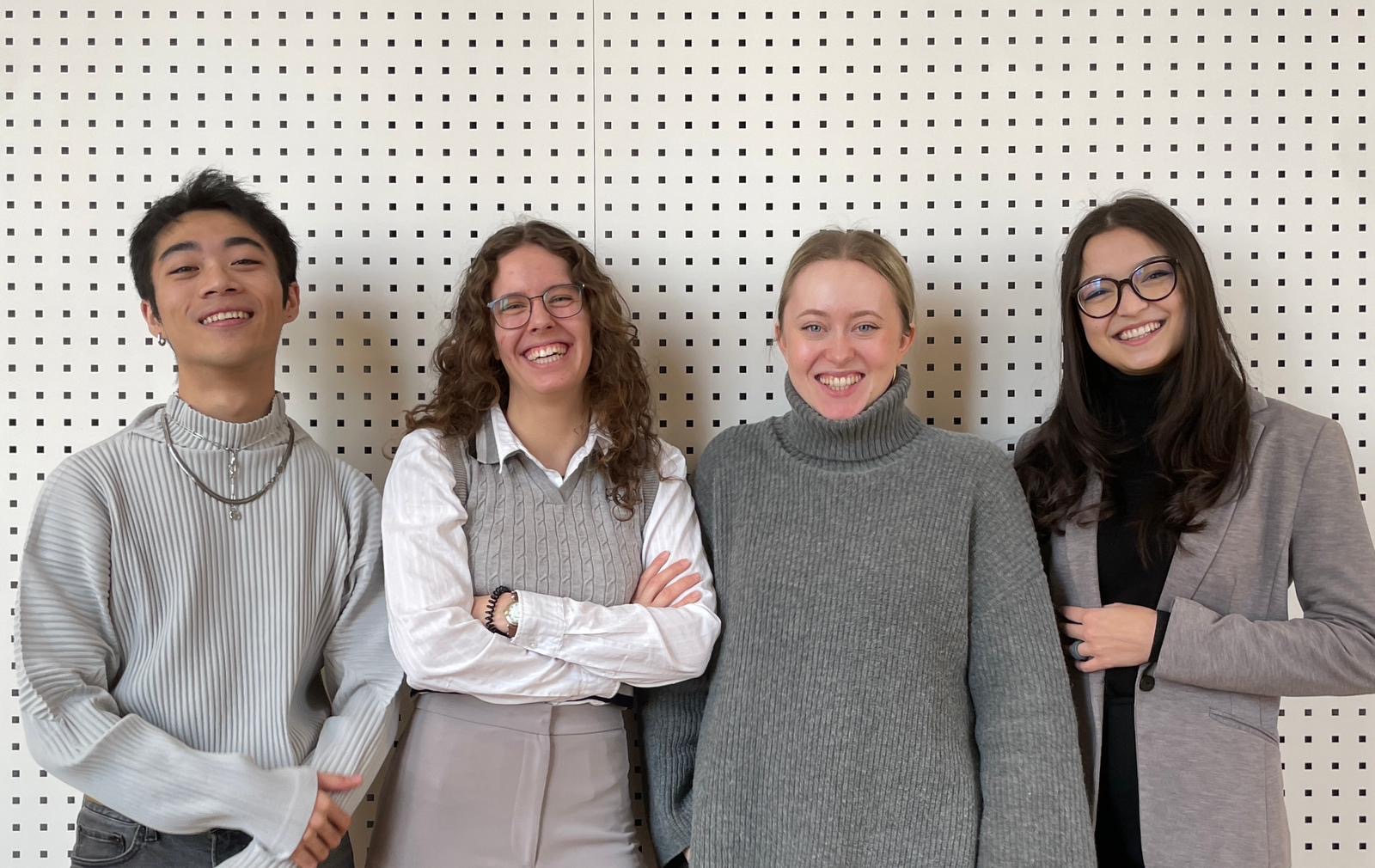
Marika Bach | Ina Jade Seng | Tyler Lin | Johanna Oberst | Jenny Weber
10/2024 - 01/2025
Our goal is to create a safe and empowering space for Gen Z to understand and manage the connection between stress and the nervous system by raising awareness, providing practical tools for self-regulation, and fostering education on healthy lifestyle choices to prevent chronic illness.
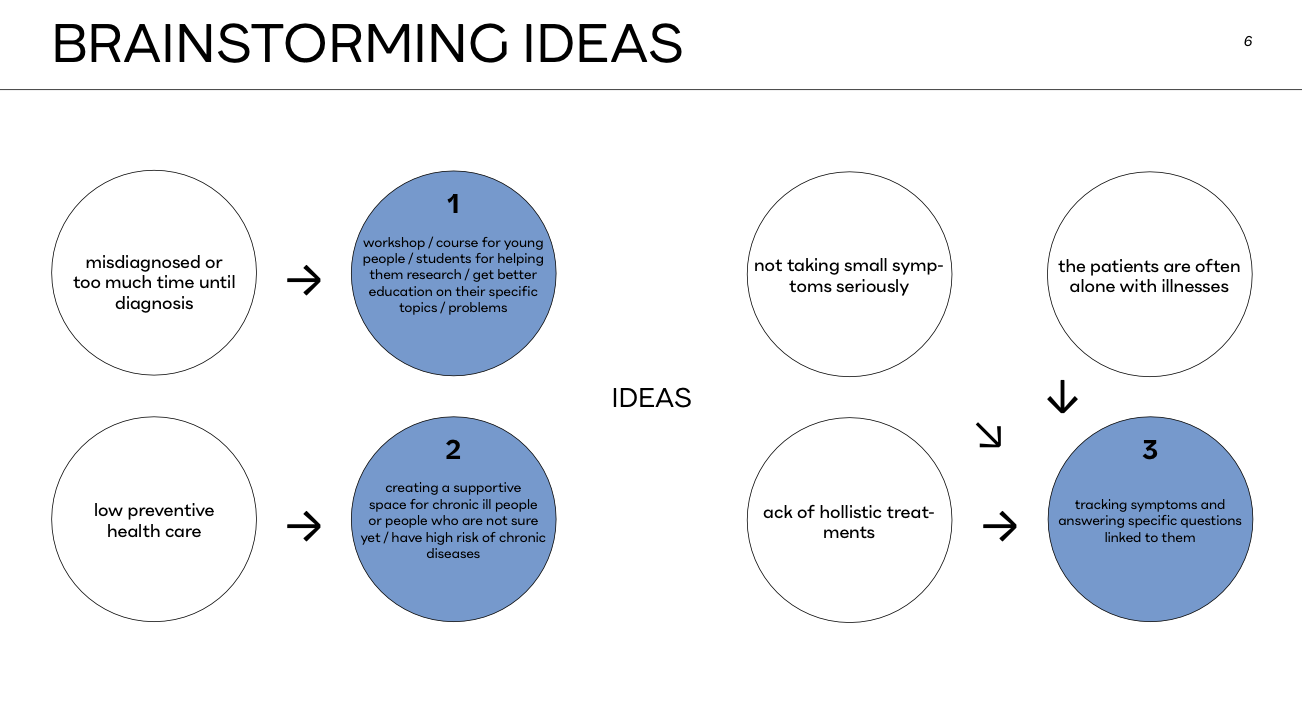
First we brainstormed about the problems of chronic illness, we decided after our first 3 ideas (prevention workshop, supportive space, tracking symptoms) to focus on one main point, the prevention of chronic illness for young people.
After defining our stakeholders, we looked at where we saw the most potential to help GenZ. We did some research and found out that stress is the key factor for poor health in the younger generation. After a few interviews, we created an example persona called Tim Müller and asked ourselves: How can we help Tim?
Once we had identified our task, we opened ourselves up to new solutions. Our guiding question was:
"How can we help Tim and his generation feel in control of their stress and build resilience in their daily lives?"
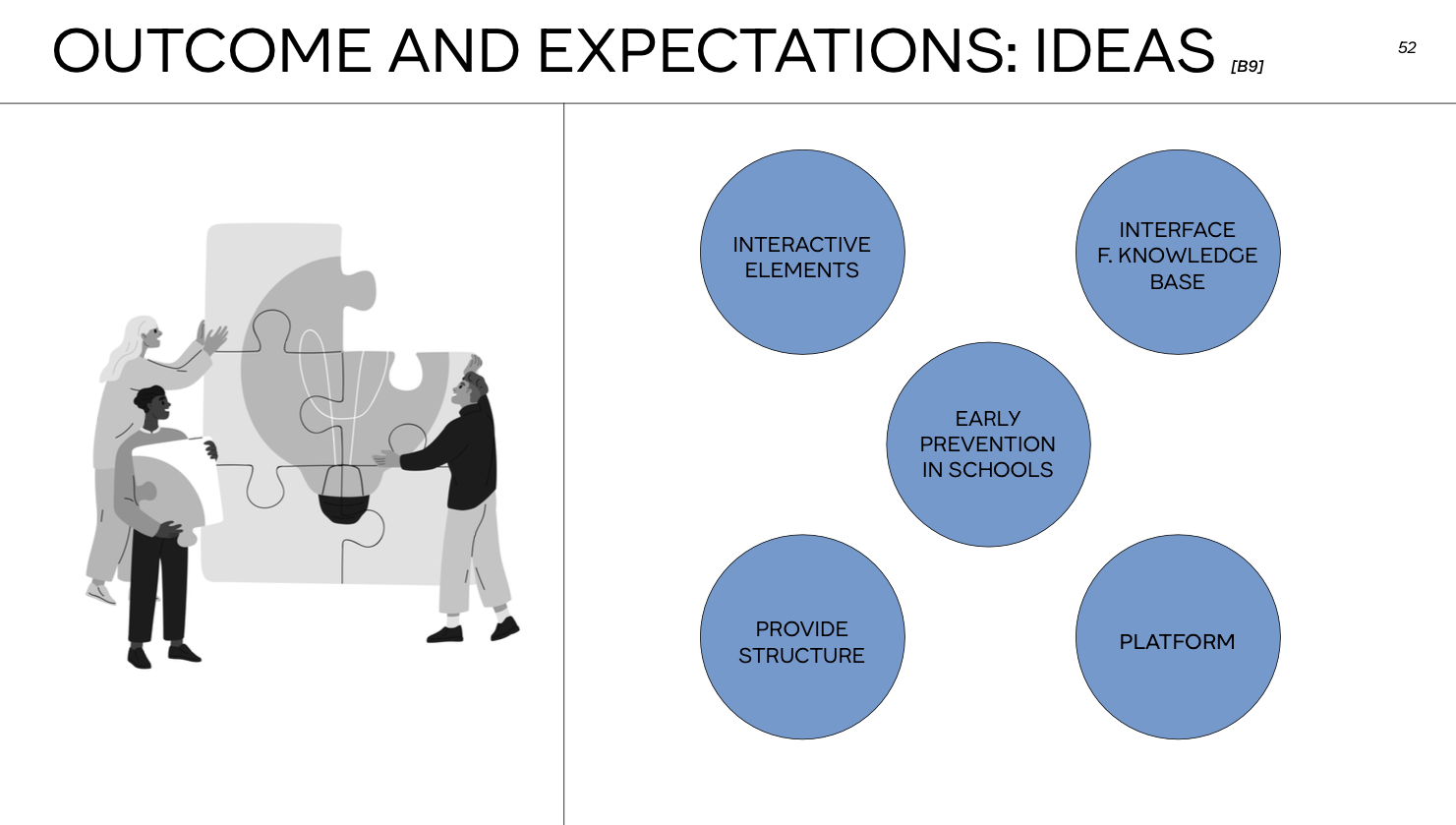
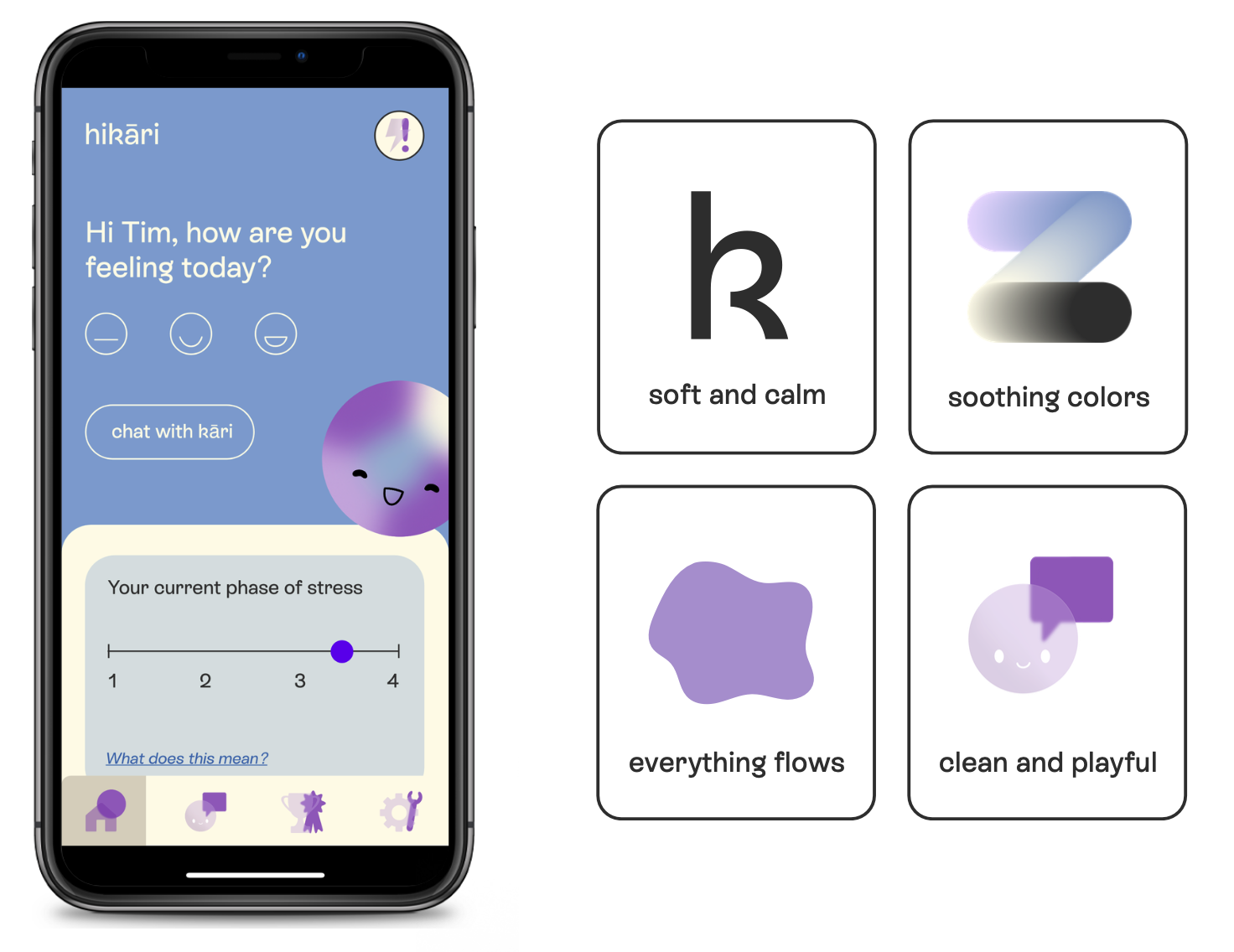
In order to solidify the concept, we decided on 4 main points that are important to us in our service app. In this phase we also had the idea to develop a physical object in addition to the app.
This is where the first design ideas were born, both for the app and the ring, with our team splitting into categories. Tyler and I worked on the ring, while Jenny and Joahanna focused on the app and our support buddy Kāri. For m
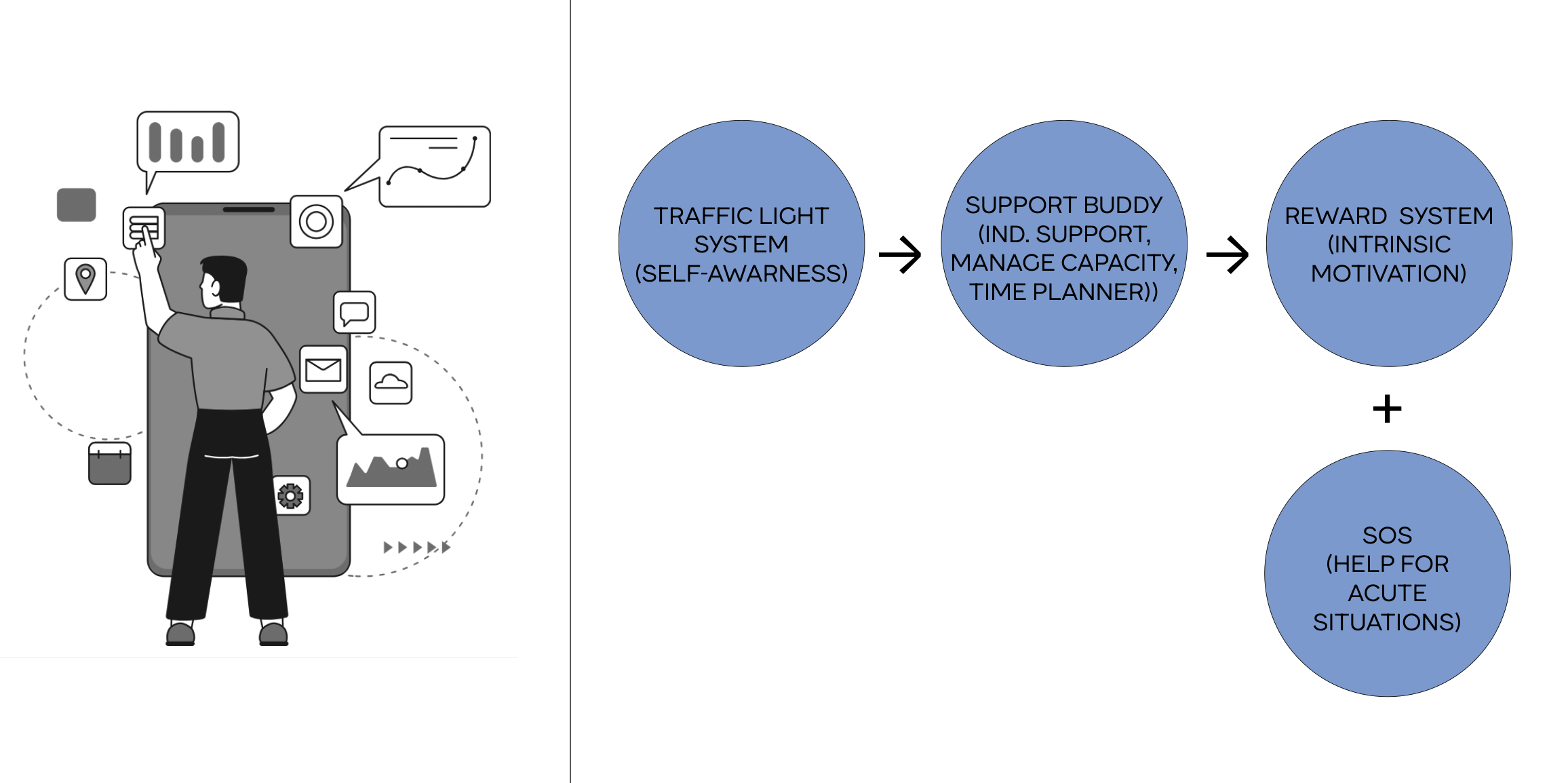
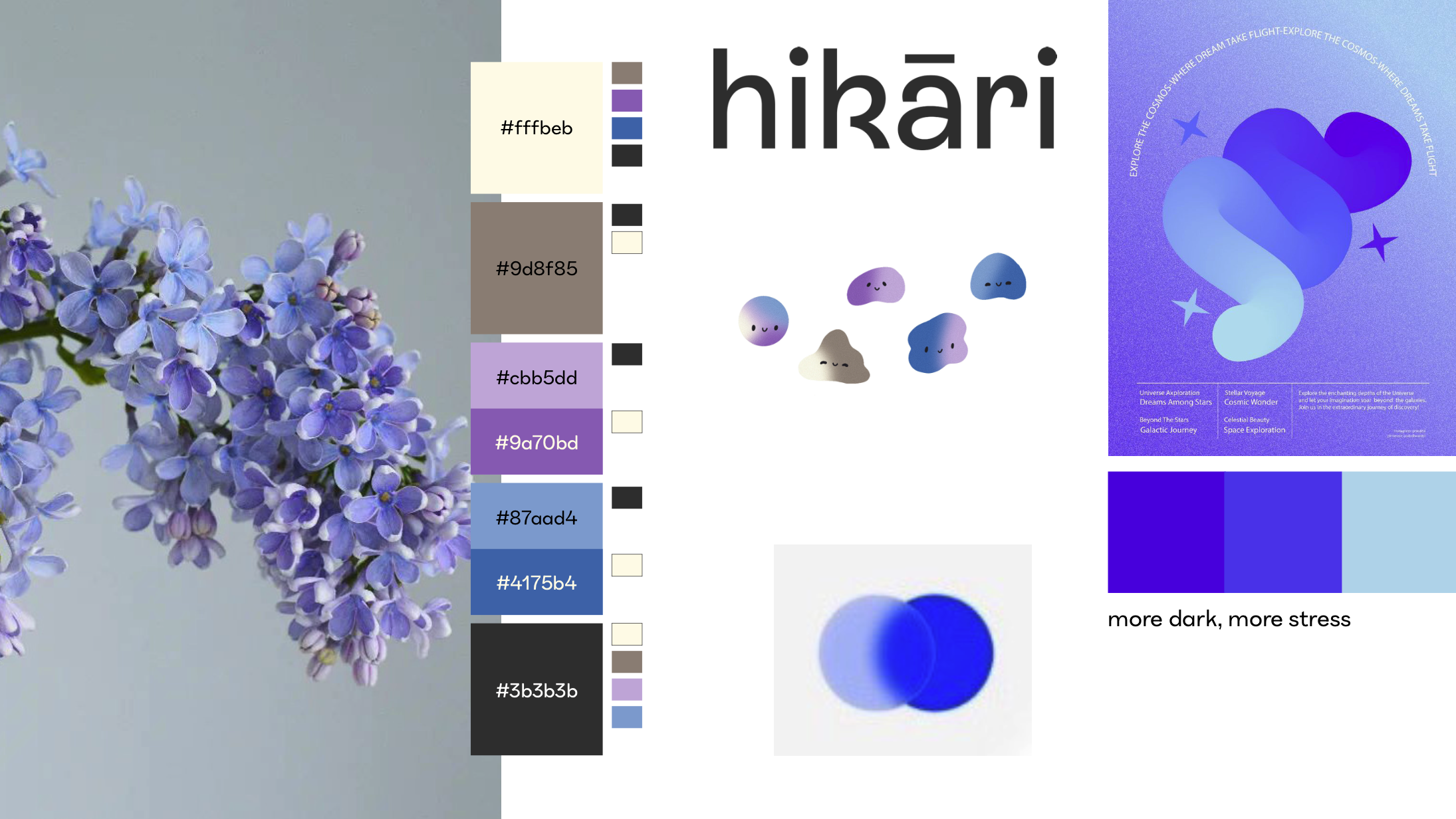
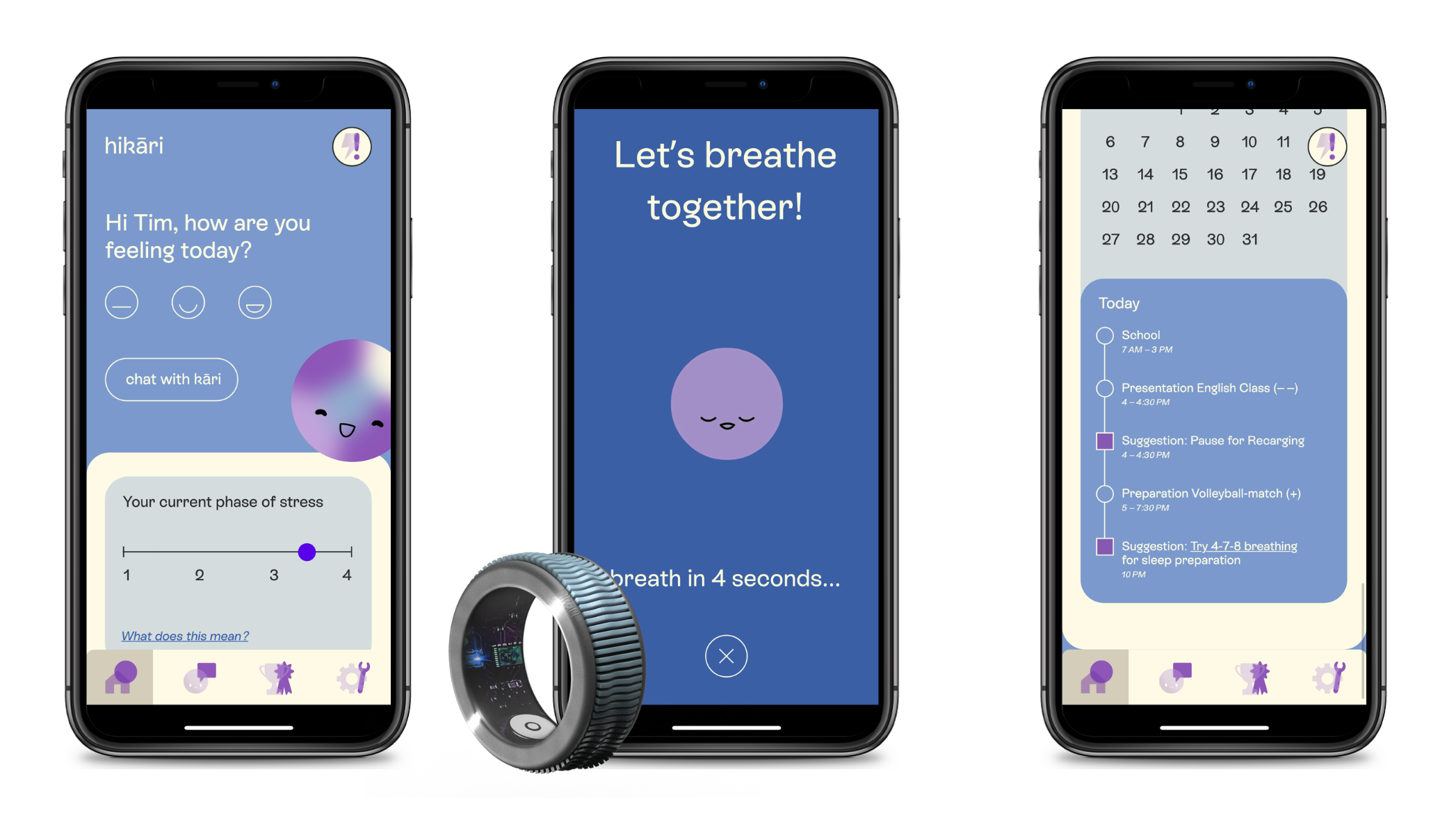
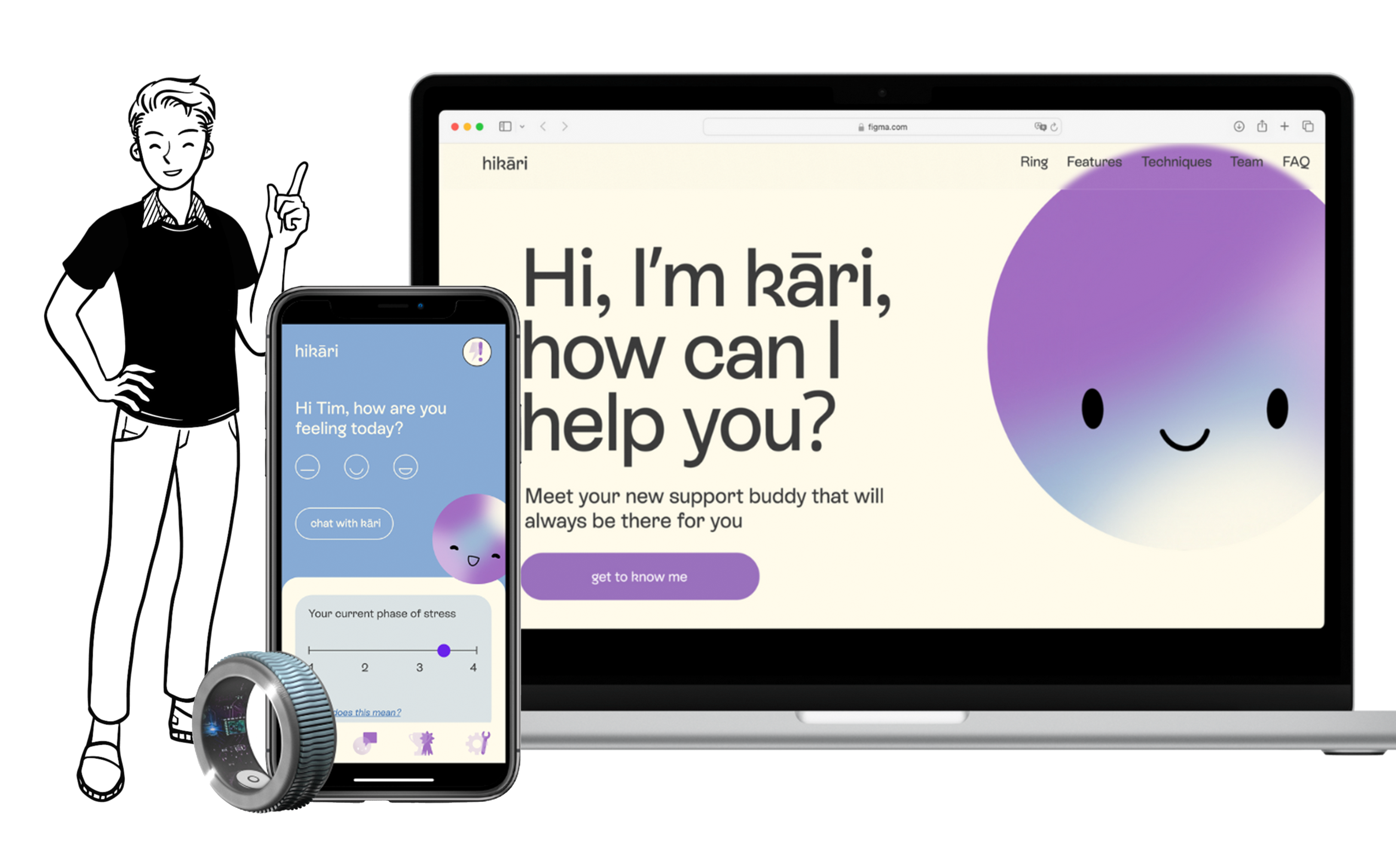
Hikāri (Japanese for light, knowledge, calm) is our stress management app that connects to the ring's data. The main features of the app are the basic settings, the self- awareness journal and stress tracker, a capacity planner with smart features, our support buddy Kāri, and weekly goals and streaks to help Gen Z use the app regularly.
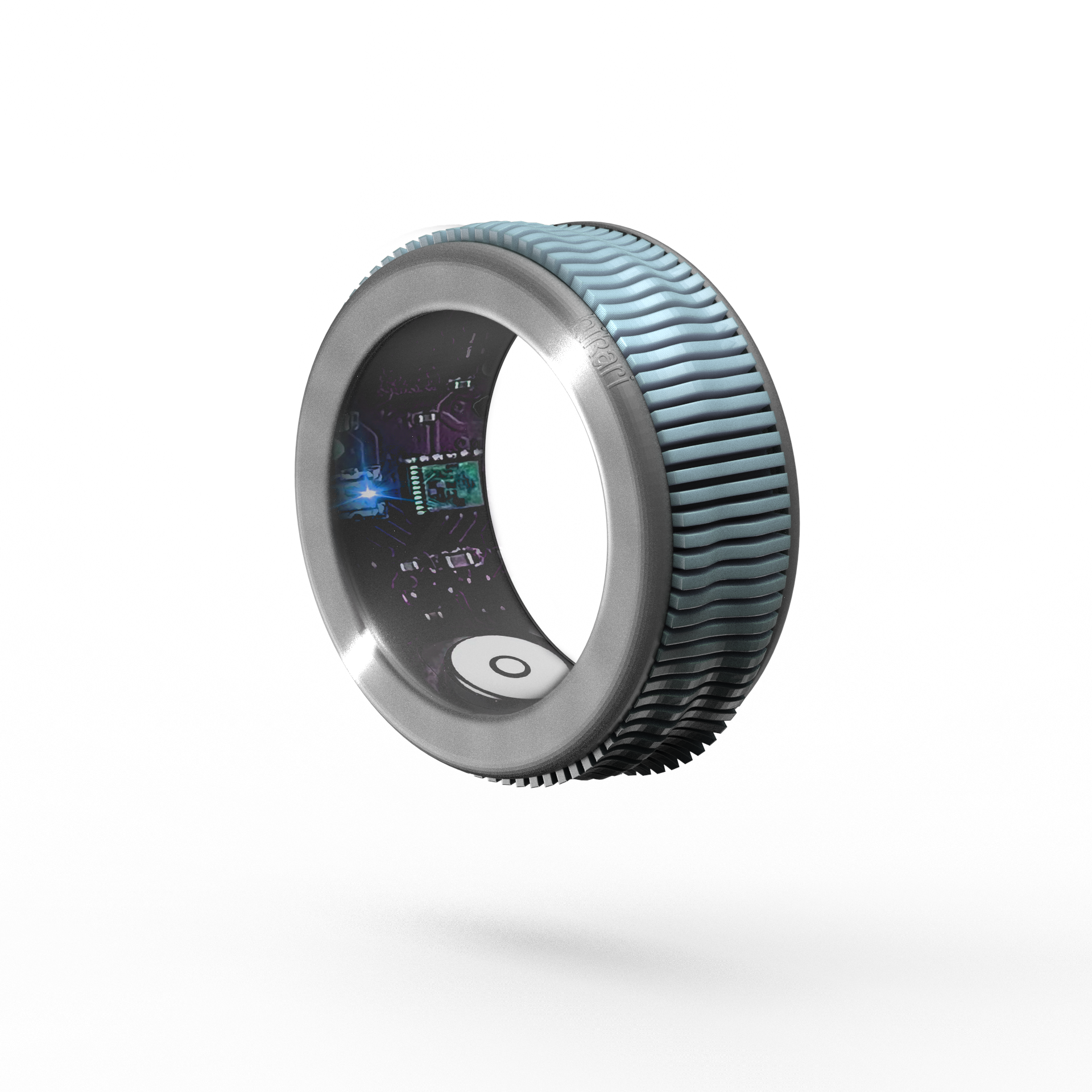
The purpose of the smart rings is to track heart rate and heart rate variability (HR+ HRV), electrodermal activity (stress), blood oxygen saturation (Sp02), body temperature and sleep stages. To do this we need a PPG and EDA sensor.
For the material we thought of stainless steel or tungsten carbide for the case, for the rotating inner we need an electrochromic material so that the colours can be controlled. To make this part more interesting, we used a wavy asymmetric design for a haptic experience.
For discreet use in everyday life, we designed a smart ring with a stress level indicator that can be twisted for active stress relief in any situation.
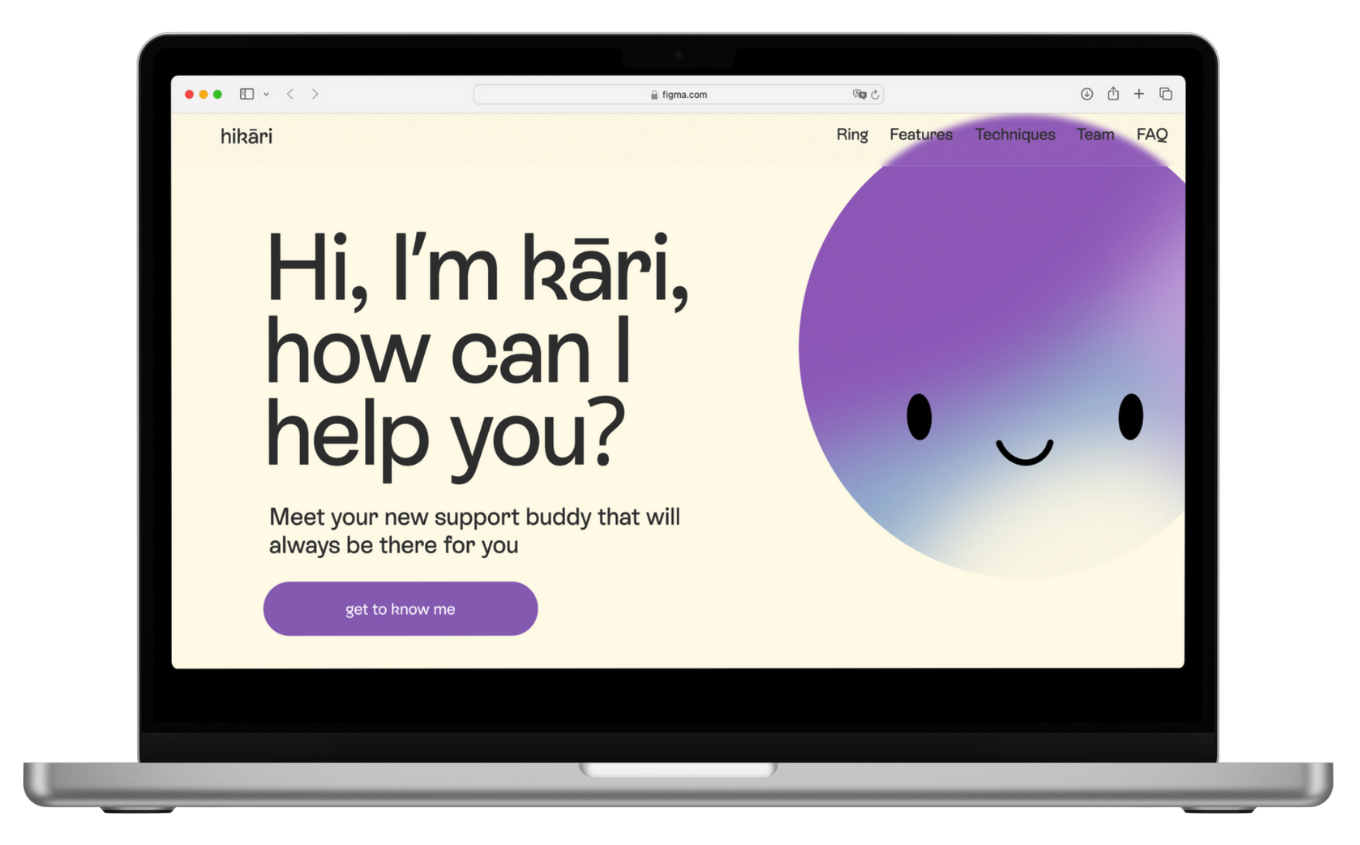
For more detailed information, we have created a landing page for Hikāri, as a continuation of the project is in prospect (probably a start-up).
Hikāri Landing Page
Finally, we have entered the testing phase with our prototype of the app and have received the following feedback from our testers:
"I definitely would recommend the app to my friends because it can be very helpful"
"I want to know more about the stress phases, they need more explanation"
We will work with both and are looking forward for the next steps with Hikāri.
All in all, with Hikari we can offer Tim and the GenZ a short and long term solution for stress management. Who knows, maybe our ring will become the new status symbol of the youth.